5 Things to Check Before You Apply
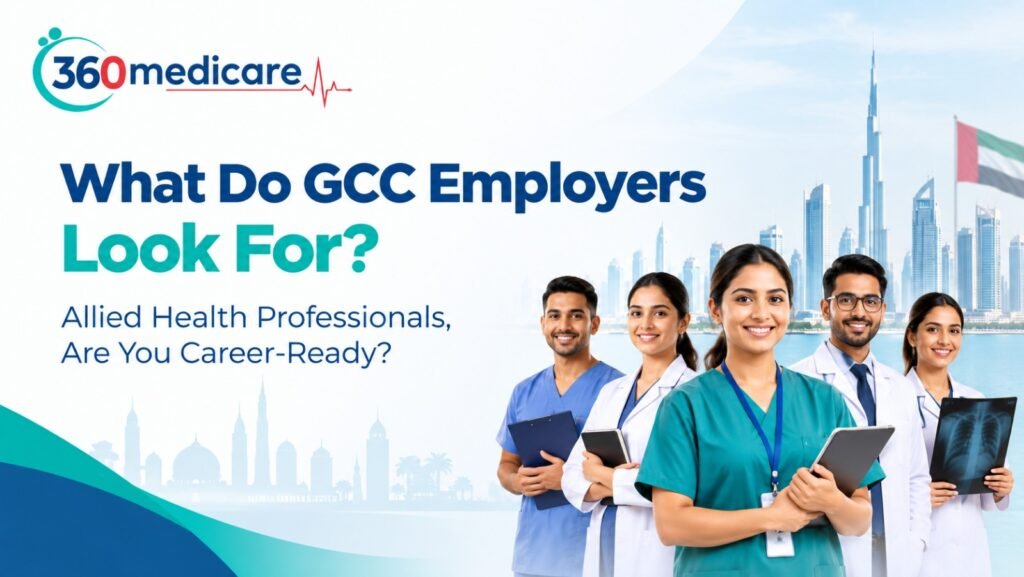
Are you an Allied Health Professional planning to build your career in the Gulf Cooperation Council (GCC) countries? Whether you are a Physiotherapist, Occupational Therapist, Medical Laboratory Scientist, Radiographer, Audiologist, or another allied healthcare professional, understanding employer expectations is an essential first step towards your international career.
Your qualification is just the beginning! Professional licensing, relevant experience, verified documentation, and country-specific eligibility requirements can all influence your career opportunities in the GCC.
Before you start applying for jobs in the UAE, Saudi Arabia, Qatar, or other Gulf countries, here are five important things you should check.
- Recognised Qualifications: Is Your Degree Accepted?
Your educational qualification is one of the first things to review when exploring healthcare opportunities abroad.
GCC healthcare regulators may assess your degree or diploma, the institution where you studied, the duration of your course, clinical training, and other academic details according to the requirements for your profession.
For example, a Physiotherapist and a Medical Laboratory Scientist may have different qualification and training requirements.
What should you do?
- Check whether your qualification meets the requirements for your intended professional category.
- Keep your degree certificate and academic transcripts ready.
- Review any additional requirements relating to clinical training or internship experience.
Remember, holding a healthcare qualification does not automatically guarantee eligibility for professional registration or employment abroad.
- Professional Licensing: Know Your Destination’s Requirements
Planning to work in the GCC healthcare sector? Professional licensing should be part of your preparation from the beginning.
Healthcare professionals generally need to meet the applicable registration, classification, or licensing requirements before practising in regulated healthcare roles.
The responsible authority depends on your destination. For example:
- UAE: Requirements may depend on the relevant health authority and the emirate or healthcare jurisdiction.
- Saudi Arabia: The Saudi Commission for Health Specialties (SCFHS) handles professional classification and registration.
- Qatar: The Department of Healthcare Professions (DHP) regulates healthcare professional licensing.
- Other GCC countries: Bahrain, Kuwait and Oman have their own regulatory processes and requirements.
Depending on your profession and application category, the process may involve qualification assessment, primary-source verification, professional registration, examinations, or other eligibility checks.
Pro tip: Identify the correct regulator for your profession and destination before investing time and money in the application process.
- Relevant Experience: Does Your Professional Background Match?
Your work experience can play an important role in your eligibility for healthcare positions in the GCC.
Employers may look for candidates with relevant clinical experience, practical skills, familiarity with healthcare procedures, and the ability to work effectively within a clinical team.
However, experience requirements are not the same for every profession, employer, or country. Some positions may accept less experience than others, while certain licensing categories may require a specific duration of professional practice.
Before applying, check:
- Whether your experience matches the target position.
- Whether your internship or clinical placement can be counted under the applicable rules.
- Whether your experience letters clearly mention your designation, employment dates, and duties.
- Whether any career gaps or registration-related conditions need clarification.
A well-documented professional history can help you demonstrate your suitability for the role.
- Verified Documents: Keep Your Paperwork Ready
Documentation is an important part of international healthcare recruitment. Missing, inconsistent, or unverifiable documents can delay your application.
Depending on the destination and profession, you may need:
- Degree or diploma certificates.
- Academic transcripts and clinical training records.
- Professional registration or licence.
- Experience certificates.
- Passport and identification documents.
- Certificate of Good Standing, where required.
- Primary-source verification or other document authentication.
- Additional documents requested by the relevant regulator or employer.
Some destinations and professional categories require verification through designated services or regulatory procedures. The documents required and the verification process can vary.
Pro tip: Ensure that your name, dates, qualifications, and employment details are consistent across your documents. Check the latest official checklist before submitting your application.
- Country-Specific Requirements: One GCC Pathway Does Not Fit All
One of the most important things to understand is that the GCC does not have a single, universal healthcare licensing system.
The requirements for a Radiographer applying in the UAE may differ from those for a Radiographer applying in Saudi Arabia or Qatar. The same applies to Physiotherapists, Occupational Therapists, Audiologists, Medical Laboratory Scientists, and other allied health professionals.
Your eligibility may depend on several factors, including:
- Your profession and qualification.
- Your clinical experience.
- Your current professional registration.
- The applicable licensing category.
- Examinations or assessments, where required.
- Additional conditions imposed by the regulator or employer.
That is why researching your intended destination before applying is so important. A pathway suitable for one country may not be appropriate for another.
How Can Allied Health Professionals Prepare for GCC Opportunities?
Before starting your international job search, take these practical steps:
- Choose your destination: Decide which GCC country and professional role you want to explore.
- Review your eligibility: Compare your qualification, experience, and registration against the relevant requirements.
- Organise your documents: Collect your academic records, experience letters, and professional registration documents.
- Check the licensing pathway: Identify the relevant regulator and any required assessments or verification procedures.
- Seek professional guidance: Get your profile reviewed before proceeding with applications.
Preparing in advance can help you identify potential gaps, understand the next steps, and avoid unnecessary delays.
Start Your GCC Healthcare Career Journey with 360Medicare
Your international career journey deserves the right preparation.
At 360Medicare, we help Allied Health Professionals explore overseas career pathways by understanding their qualifications, experience, documentation, and destination preferences.
Whether you are a Physiotherapist, Occupational Therapist, Radiographer, Audiologist, Medical Laboratory Scientist, or another Allied Health Professional, reviewing your profile is a useful first step towards understanding your available options.
Don’t guess. Get your profile checked!
Connect with 360Medicare to explore your Allied Health career pathway and take your next step towards GCC opportunities.
Eligibility, professional licensing, and employment opportunities depend on the relevant regulatory authority, individual qualifications, experience, and employer requirements.
Frequently Asked Questions (FAQs)
- Which Allied Health Professionals can explore career opportunities in the GCC?
Professionals such as Physiotherapists, Occupational Therapists, Radiographers, Medical Laboratory Scientists, Audiologists, and other allied healthcare professionals can explore opportunities, subject to the requirements of their profession and destination.
- Is professional licensing required to work as an Allied Health Professional in the GCC?
Healthcare roles that are regulated generally require the appropriate professional classification, registration, or licence. The exact process depends on the country, profession, and applicable regulatory authority. - Can I apply for GCC healthcare jobs without work experience?
Some employers may consider entry-level candidates, but other positions and licensing categories require relevant experience. Check the requirements for your specific profession and destination before applying. - Do all GCC countries have the same healthcare licensing requirements?
No. The UAE, Saudi Arabia, Qatar, Bahrain, Kuwait, and Oman have different regulatory frameworks. Always check the official requirements for your intended destination.
- What documents should I prepare before applying?
Commonly requested documents include academic certificates, transcripts, professional registration, experience letters, and identification documents. Additional documents or verification may be required depending on your application.
Take the First Step Today
Your qualification could open doors to international career opportunities—but preparation matters.
Connect with 360Medicare and get your profile checked before you start.