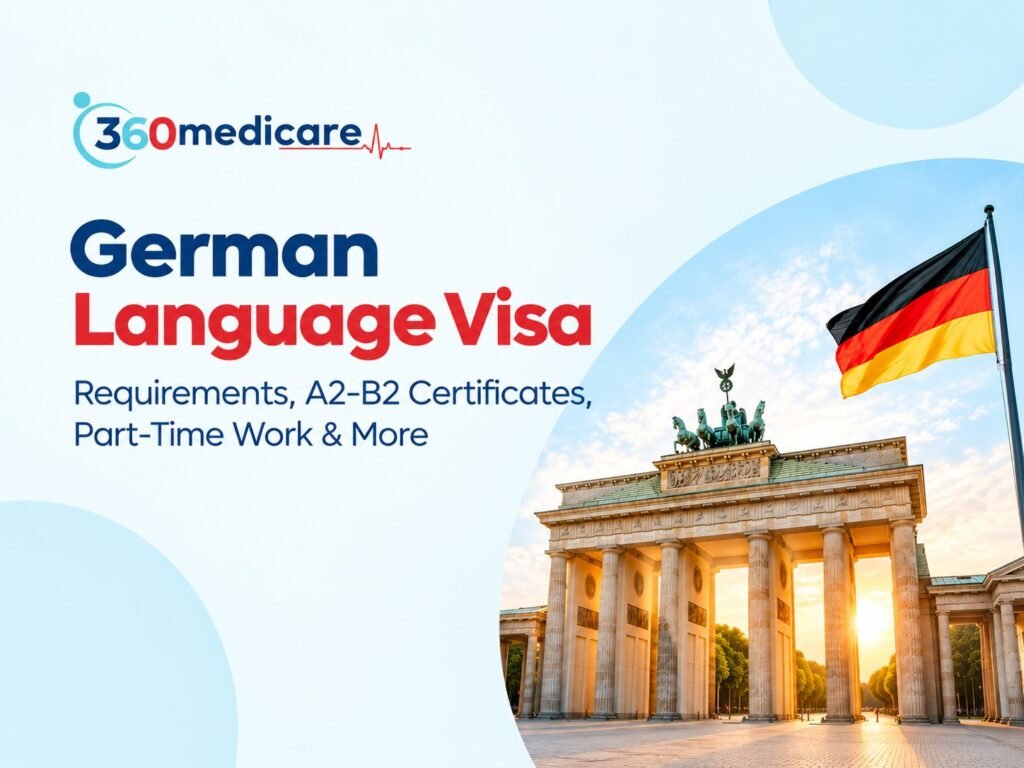
Planning to learn German in Germany? Explore German Language Visa requirements, A2–B2 proficiency certificates, partial modules, expired certificates, part-time work rules and the application process.
Introduction: Start Your German Language Journey in Germany
Germany is an attractive destination for students and professionals who want to improve their German language skills, explore new opportunities, and prepare for future academic or professional pathways. For individuals planning to learn German in an immersive environment, a German Language Visa for Germany may be an option, depending on the purpose and duration of the intended language course.
If you already have German language proficiency at A2, B1, or B2 level, you may be wondering whether your existing certificate can support your visa application. You may also have completed only some modules of a language examination or hold a certificate that has expired.
Understanding the relevant requirements is an important first step. At 360Medicare, we help candidates explore German language learning and international career pathways by providing guidance on language preparation, documentation, and application procedures.
What Is a German Language Visa?
A German Language Visa is a visa pathway intended for eligible individuals who wish to travel to Germany primarily to attend an intensive German language course.
It can be relevant for students and professionals who want to develop their German communication skills before pursuing further education, vocational training, or other opportunities for which German proficiency is important.
For example, healthcare professionals preparing for a career in Germany may need to strengthen their German language skills to communicate effectively with patients, colleagues, and employers. Students may also wish to improve their language proficiency before pursuing a suitable academic or vocational pathway.
Important: The visa category, course requirements, financial documentation, and other eligibility conditions depend on the applicant’s circumstances and the applicable German immigration rules. A language certificate alone does not guarantee visa approval.
Can You Apply for a German Language Visa with A2, B1, or B2 German?
Candidates who already possess German language proficiency at A2, B1, or B2 level may wish to explore a language course visa to continue learning German in Germany.
Your existing proficiency level can help demonstrate your language-learning progress. However, the German language level required for the intended course and the supporting documents accepted for the visa application depend on the relevant course and visa requirements.
- German Language Visa with an A2 Certificate
An A2 certificate indicates basic German language proficiency. Candidates at this level may want to improve their vocabulary, grammar, listening skills, and everyday communication through further language study.
If you hold an A2 certificate, you can explore suitable German language courses and check whether your proposed course and visa category meet the applicable requirements.
- German Language Visa with a B1 Certificate
A B1 certificate demonstrates intermediate German proficiency and a stronger ability to communicate in familiar situations.
Candidates with B1 German may consider further language training to develop more advanced communication skills. This can be particularly relevant for individuals preparing for education, vocational training, or professional opportunities in Germany.
Before applying, confirm that the planned course is appropriate for your current level and that you meet the visa requirements.
- German Language Visa with a B2 Certificate
B2 German proficiency reflects an upper-intermediate level of language ability. It can be valuable for professionals who need stronger communication skills for workplace interactions and further professional preparation.
For healthcare professionals, additional language training may focus on medical terminology, patient communication, clinical discussions, and professional documentation.
Candidates with B2 proficiency should identify a suitable course and verify whether a language-course visa is the appropriate route for their actual purpose of travel.
Remember: A2, B1, and B2 are language proficiency levels, not automatic visa eligibility categories. The purpose of travel, course structure, documentation, and applicable immigration rules remain important.
Can You Apply with Partial German Language Modules?
Some candidates have completed only certain modules of a German language examination rather than receiving a complete certificate. These modules may assess skills such as:
- Listening
- Reading
- Writing
- Speaking
If you have passed some modules but have not completed the full examination, you may still be able to present your available results as supporting evidence when discussing your application options.
However, partial modules are not automatically accepted as equivalent to a complete German language certificate. Their relevance depends on the visa authority’s requirements, the language school, and the purpose of the application.
Before proceeding, gather your available examination results and confirm which documents are accepted. If additional modules are required, you may need to complete them or provide other acceptable evidence of your language proficiency.
Can You Apply with an Expired German Language Certificate?
An expired German language certificate may still be useful as supporting evidence of your previous language-learning progress. However, acceptance depends on the requirements of the relevant visa authority and the circumstances of your application.
For example, a candidate who previously achieved B1 German may wish to continue studying at a higher level in Germany. An older certificate could help explain the candidate’s learning background, but it may not satisfy a requirement for a current or formally recognised certificate.
If your certificate has expired, consider the following steps:
- Keep a copy of the certificate and any examination results.
- Check whether the relevant authority requires a certificate issued within a specified period.
- Confirm whether the language school accepts your existing proficiency evidence.
- Ask whether a new examination or additional documentation is necessary.
- Ensure that your application accurately reflects your current language level.
Do not assume that an expired certificate will be accepted simply because you previously passed the examination. Confirm the current requirements before making financial or travel commitments.
Can You Work Part-Time on a German Language Visa?
Part-time employment is an important consideration for candidates planning to stay in Germany while studying German.
However, work permission depends on the exact residence status or visa conditions applicable to the individual. The commonly cited limit of 20 hours per week should not be assumed to apply automatically to every German Language Visa.
Before accepting employment, applicants should verify whether their specific immigration status permits work and what limits or conditions apply. The permitted hours, type of employment, and any additional restrictions must be checked against the applicable rules.
If part-time work is legally permitted in your circumstances, it may help you gain practical experience and support your integration into German society. Nevertheless, you should not rely on prospective employment as your sole means of meeting visa financial requirements.
What Should You Check Before Working in Germany?
- Whether your visa or residence permit explicitly permits employment.
- The permitted working hours and any applicable restrictions.
- Whether additional approval or registration is required.
- Whether your employment complies with German labour and tax regulations.
- Whether your financial documentation for the visa remains adequate.
Always confirm your individual work rights before beginning employment.
German Language Visa Requirements: Documents to Prepare
The documents required for a German Language Visa can vary depending on the applicant’s circumstances, the course, and the responsible German mission.
Commonly relevant documents may include:
- A valid passport.
- A completed visa application and required photographs.
- Proof of enrolment or registration for an eligible German language course.
- Details of the course duration, schedule, and fees.
- Proof of previous German language proficiency, where relevant.
- Financial evidence demonstrating sufficient funds for the intended stay.
- Proof of suitable health insurance.
- Accommodation details, where required.
- A statement explaining the purpose of the stay and language-learning plans.
- Any additional documents requested by the responsible visa authority.
Candidates with partial modules or expired certificates should also retain their available examination records and verify whether those documents can be considered.
This list is a general preparation guide, not a definitive checklist for every application. Always consult the latest requirements published by the responsible German mission before submitting your application.
How to Apply for a German Language Visa
A well-prepared application begins with a clear study plan and a thorough understanding of the relevant requirements.
Step 1: Identify Your Purpose
Determine why you want to learn German in Germany and whether a language-course visa is the correct category for your intended stay.
Step 2: Assess Your Current German Level
Identify whether your current proficiency is A2, B1, B2, or another level. Collect your available certificates and module results, including older certificates if applicable.
Step 3: Choose a Suitable Language Course
Research an appropriate course and confirm its duration, intensity, schedule, fees, and enrolment conditions.
Step 4: Verify the Visa Requirements
Check the official requirements for the relevant German mission and confirm the documents needed for your specific visa category.
Step 5: Prepare Your Supporting Documents
Organise your passport, course confirmation, financial evidence, insurance documents, language records, and any other required supporting materials.
Step 6: Submit Your Application
Follow the official application procedure for the responsible German mission, including appointment, fee payment, and document submission requirements.
Step 7: Wait for the Decision
Processing times vary. Avoid making non-refundable travel arrangements until you have confirmed the status of your application and received the necessary approval.
Is the German Language Visa Suitable for Healthcare Professionals?
Germany attracts healthcare professionals who want to develop their careers in an international environment. For nurses, physiotherapists, and other healthcare professionals, German language proficiency can be an important part of preparing for professional communication and recognition requirements.
A language-course visa may be relevant to some candidates, depending on their actual plans and eligibility. However, individuals travelling for employment, professional recognition, vocational training, or another specific purpose may need a different visa or residence permit.
Healthcare professionals should consider the following before choosing a pathway:
- Their current German language level.
- The language level required by their intended employer or professional authority.
- Any professional recognition or licensing requirements.
- Whether their goal is language study, vocational training, or employment.
- The visa or residence route that corresponds to their actual purpose.
Selecting the appropriate pathway at the beginning can help reduce unnecessary delays and expenses.
Common Mistakes to Avoid When Applying
Candidates should be careful to avoid the following mistakes:
Assuming every language certificate is accepted: The relevance of an A2, B1, B2, partial-module, or expired certificate depends on the applicable requirements.
Choosing the wrong visa category: A language-course visa may not be suitable if the primary purpose is employment, vocational training, or another activity.
Relying on unverified part-time work rules: Always confirm your legal right to work and the applicable restrictions.
Submitting incomplete financial documents: Applicants must meet the financial requirements applicable to their individual case.
Using outdated application information Visa procedures and documentation requirements can change, so consult official sources before applying.
Booking travel too early: Wait until you have the appropriate visa approval before making non-refundable arrangements.
How 360Medicare Can Help You Explore Your Germany Pathway
Planning a move to Germany involves more than learning the language. Candidates may also need to understand documentation requirements, professional pathways, language progression, and the differences between available visa categories.
360Medicare supports candidates exploring Germany-related education and career opportunities by helping them understand potential pathways and prepare for the next steps.
Depending on your profile and goals, guidance may include:
- Understanding your current German language proficiency.
- Exploring suitable language-learning options.
- Reviewing available documentation for initial planning.
- Understanding the distinction between language study, vocational training, and employment pathways.
- Identifying questions to clarify with the relevant German authorities.
Every candidate’s circumstances are different. Visa eligibility and approval remain subject to the applicable immigration rules and the decision of the responsible authorities.
Frequently Asked Questions (FAQs)
- Can I apply for a German Language Visa with an A2 certificate?
You may explore the option, depending on the intended course and visa requirements. An A2 certificate does not by itself establish eligibility, so confirm the requirements for your specific application.
- Is a B1 or B2 German certificate accepted for a Language Visa?
A B1 or B2 certificate can help demonstrate your language-learning background. Whether it is sufficient or relevant depends on your planned course and the applicable visa requirements.
- Can I apply with only some German language modules completed?
Partial-module results may be useful supporting documents, but they are not automatically treated as equivalent to a complete certificate. Check with the responsible authority and language school before applying.
- Will an expired German language certificate be accepted?
An expired certificate may provide evidence of previous learning, but acceptance is not guaranteed. You should confirm whether a current certificate is required for your specific application.
- Can I work 20 hours per week on a German Language Visa?
Not automatically. Your right to work depends on the visa or residence status and the conditions that apply to you. Verify the permitted working hours with the responsible authority before accepting a job.
- Does a German Language Visa guarantee a job in Germany?
No. A language-course visa is intended for eligible language-study purposes and does not guarantee employment, professional recognition, or a future work visa.
- Can nurses and physiotherapists use a German Language Visa?
Some healthcare professionals may be eligible for a language-study pathway, depending on their circumstances. Those travelling specifically for employment, recognition, or vocational training should check whether a different immigration route is more appropriate.
Conclusion: Plan Your German Language Journey with the Right Guidance
A German Language Visa may offer an opportunity to improve your German in an immersive learning environment. Whether you hold an A2, B1, or B2 certificate, have completed only some examination modules, or possess an older certificate, the most important step is to understand the requirements that apply to your individual case.
Before applying, confirm your course details, supporting documents, financial requirements, and work permissions. Choosing the correct pathway from the beginning can help you plan your next steps with greater confidence.
Planning to study German in Germany or explore a career pathway there? Connect with 360Medicare to discuss your options and prepare for your next step.
Disclaimer: This article provides general information for educational purposes and does not constitute legal or immigration advice. Visa categories, eligibility conditions, documentation requirements, and employment permissions may change. Always consult the official German mission or competent immigration authority for current requirements.