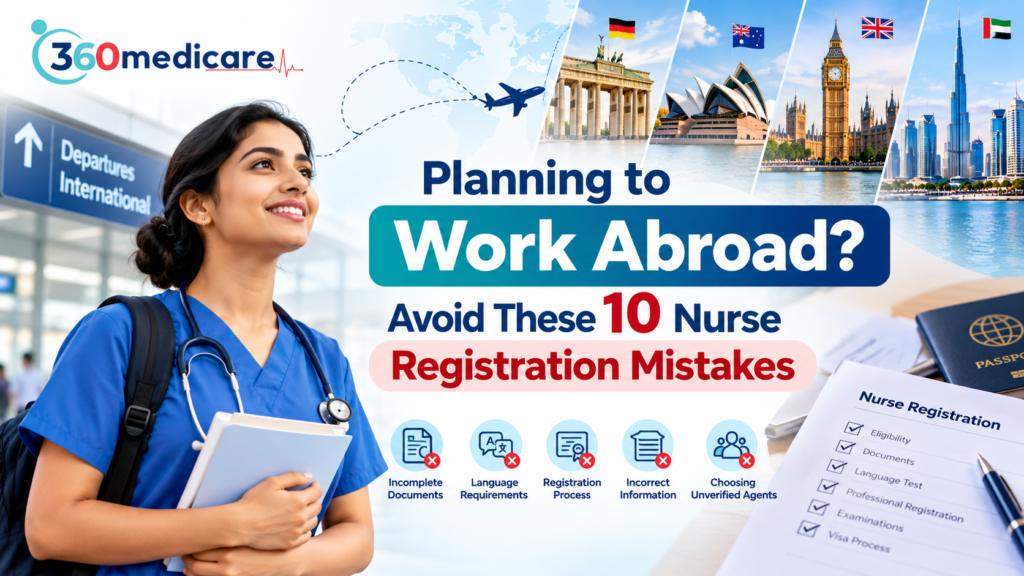
Are you a qualified nurse dreaming of building an international career? Countries such as Germany, Australia, the United Kingdom, Ireland, Canada, and the GCC offer career opportunities for skilled nursing professionals. However, obtaining professional nursing registration is one of the most important steps before beginning your overseas nursing journey.
Every year, internationally qualified nurses face unnecessary delays, additional expenses, and application complications because of avoidable mistakes during the overseas nursing registration process.
Whether you are applying for AHPRA registration in Australia, NMC registration in the UK, NMBI registration in Ireland, or nursing recognition in Germany, understanding the requirements can save valuable time and money.
At 360Medicare, we help nurses understand international registration pathways and prepare for overseas healthcare careers. Here are ten common nurse registration mistakes you should avoid.
1. Applying Without Checking Eligibility Requirements
One of the biggest mistakes nurses make is starting an international registration application without checking whether they meet the destination country’s eligibility criteria.
Each nursing regulatory authority has different requirements regarding educational qualifications, clinical experience, language proficiency, and professional registration.
For example, Australia assesses internationally qualified nurses through AHPRA and the Nursing and Midwifery Board of Australia (NMBA), while Germany requires assessment of foreign nursing qualifications by the relevant recognition authority.
How to avoid this mistake: Complete an eligibility assessment before paying registration fees or beginning examinations.
2. Choosing the Wrong Nursing Registration Pathway
Not every internationally qualified nurse needs to follow the same registration process.
Australia, for example, has introduced streamlined registration pathways for certain eligible internationally qualified registered nurses with relevant qualifications and professional practice in approved comparable jurisdictions.
Eligible applicants may qualify for a simplified assessment route, while others must complete the standard registration process, potentially including NCLEX-RN and OSCE examinations.
Choosing an unsuitable pathway can lead to unnecessary expenses and application delays.
How to avoid this mistake: Review the latest registration pathways published by the relevant nursing regulator before submitting your application.
3. Ignoring English or German Language Requirements
Language proficiency is essential for safe nursing practice and communication with patients.
Countries such as Australia, the UK, and Ireland have specific English language requirements, while Germany generally requires German language proficiency, commonly at B2 level for nursing recognition.
Some nurses begin registration without understanding which language examinations are accepted or how long their results remain valid.
How to avoid this mistake: Verify the accepted language tests, minimum scores, exemptions, and validity requirements before booking an examination.
4. Submitting Incomplete or Incorrect Documents
Documentation errors are among the most common reasons for delays in overseas nurse registration.
Missing transcripts, incorrect employment certificates, inconsistent personal details, or incomplete professional registration records can interrupt the application process.
Even minor differences in names, dates, or qualification details may require additional clarification.
How to avoid this mistake: Prepare a document checklist covering your nursing degree or diploma, academic transcripts, registration certificate, employment records, identification, and other documents required by the regulator.
5. Providing Inaccurate Clinical Experience Details
Clinical experience can influence eligibility for certain overseas nursing pathways and employment opportunities.
Some nurses submit experience certificates that do not clearly mention their department, employment period, working hours, or professional responsibilities.
Inaccurate or unverifiable employment information can create serious registration complications.
How to avoid this mistake: Obtain genuine, detailed experience certificates from previous employers and ensure all information matches your employment history.
6. Not Understanding Nursing Licensing Examinations
Many nurses assume that every destination follows the same examination system.
However, nursing licensing requirements differ considerably.
Australia may require NCLEX-RN and OSCE assessments for applicants following particular registration pathways. The UK uses its own Test of Competence system, including CBT and OSCE components.
Germany primarily follows a professional qualification recognition process, which may involve additional adaptation or knowledge assessments.
How to avoid this mistake: Understand the exact licensing requirements applicable to your qualification and registration pathway before investing in examination preparation.
7. Confusing Nursing Registration with Job Placement
Professional registration and overseas employment are two separate processes.
Receiving registration approval does not automatically guarantee a nursing job, employer sponsorship, or visa approval.
Similarly, receiving an overseas employment offer does not necessarily mean you have completed the professional licensing requirements.
How to avoid this mistake: Plan nursing registration, employer interviews, and immigration requirements as separate but connected stages of your international career journey.
8. Ignoring Registration Fees and Additional Expenses
Overseas nursing registration may involve application fees, document verification charges, language examinations, licensing assessments, translations, and visa-related expenses.
Candidates who fail to estimate these costs may experience financial difficulties midway through the process.
How to avoid this mistake: Prepare a realistic budget covering mandatory registration expenses and possible additional costs. Always verify current fees through official regulatory websites.
9. Depending on Unverified Recruitment Agencies
Choosing an unreliable overseas recruitment agency can expose nurses to misleading promises, unnecessary payments, and incorrect registration advice.
Be cautious of agencies promising guaranteed registration, confirmed visas, or employment without proper eligibility assessments.
How to avoid this mistake: Work with established recruitment providers, verify their credentials, and request clear information about services, fees, eligibility, and recruitment conditions.
10. Not Staying Updated with Registration Rules
International nursing registration requirements can change because of regulatory updates, workforce policies, and immigration reforms.
Depending on outdated information from social media or previous applicants may result in incorrect decisions.
For example, Australia’s nursing registration pathways have undergone changes intended to simplify registration for certain eligible internationally qualified nurses.
How to avoid this mistake: Regularly review official nursing regulatory websites and seek guidance based on current requirements.
How 360Medicare Supports Your Overseas Nursing Career
360Medicare is a government-approved healthcare recruitment agency supporting qualified nurses who wish to explore international career opportunities.
With offices in Kochi, Bangalore, Coimbatore, Dubai, Germany, and the UK, we assist candidates with eligibility guidance, recruitment coordination, documentation support, and information about applicable professional registration pathways.
Through 360 Future Academy, we also provide German language training and nursing examination preparation programmes, including NCLEX-RN coaching.
For eligible candidates applying through our Germany nursing recruitment programme, we offer free recruitment services, subject to programme requirements.
Our focus is to help nursing professionals make informed decisions and approach their overseas career journey with greater confidence.
Conclusion: Start Your Overseas Nursing Journey the Right Way
Working abroad as a nurse can provide valuable professional experience, international exposure, and long-term career opportunities. However, avoiding common nurse registration mistakes is essential for a smoother application process.
Checking eligibility, choosing the correct registration pathway, preparing accurate documents, and understanding language and licensing requirements can help reduce unnecessary delays.
Planning to work abroad as a nurse?
Contact 360Medicare to explore your eligibility and understand the next steps towards an international nursing career.