Planning to work as a nurse abroad? Learn how Indian nurses can transition to international healthcare, understand licensing exams, language requirements, job opportunities, and how 360medicare supports your journey.
Transitioning from Indian Nursing to International Healthcare
The demand for skilled Indian nurses has never been higher. Countries such as Germany, the UK, Australia, New Zealand, Ireland, and the Gulf nations continue to recruit qualified nurses to strengthen their healthcare systems.
Indian nurses are widely respected for their clinical knowledge, adaptability, and compassionate patient care. However, transitioning from the Indian healthcare system to an international one involves more than simply applying for a job. It requires proper planning, licensing, language proficiency, cultural adaptation, and guidance from experienced professionals.
If you’re dreaming of building a global nursing career, this guide will help you understand the entire journey.
Why More Indian Nurses Are Choosing International Careers
Working abroad offers opportunities that extend beyond higher salaries. Nurses gain exposure to advanced healthcare technologies, structured career progression, better work-life balance, international experience, and continuous professional development.
Many nurses also choose international healthcare because it provides:
- Attractive salary packages
- Better employee benefits
- Modern healthcare infrastructure
- Career specialization opportunities
- Permanent residency pathways in selected countries
- Global work experience
- Higher quality of life for themselves and their families
With the growing shortage of healthcare professionals worldwide, qualified Indian nurses are in a strong position to pursue these opportunities.
Step 1: Choose the Right Destination
Each country has different eligibility criteria, licensing processes, and career prospects.
Popular destinations include:
Germany
Germany offers excellent career opportunities through language-based recruitment programs. Nurses are required to learn German, usually up to the B2 level, before beginning their professional journey. Many candidates also choose the Ausbildung pathway or direct recruitment depending on their qualifications.
United Kingdom
The UK continues to recruit international nurses through the NHS and private healthcare providers. Candidates generally need English language proficiency and must complete the required licensing process before registration.
Australia
Australia offers excellent career growth, competitive salaries, and advanced healthcare facilities. Registration requirements vary depending on qualifications and professional experience.
Ireland and New Zealand
These countries offer rewarding careers with excellent working environments and opportunities for professional development.
Choosing the right country depends on your qualifications, language skills, long-term career goals, and personal preferences.
Step 2: Understand Licensing Requirements
One of the biggest differences between working in India and abroad is the licensing process.
Every country has its own nursing regulatory authority that ensures nurses meet professional standards before practicing.
Depending on the destination, you may need:
- Credential verification
- Registration assessment
- Licensing examinations
- English language tests
- German language certification (for Germany)
- Practical adaptation programs
- Skills assessments
Understanding these requirements early helps you avoid unnecessary delays.
Step 3: Improve Language Skills
Communication plays a vital role in patient care.
Many countries require proof of language proficiency before issuing professional registration or work permits.
Examples include:
- English language tests for English-speaking countries
- German language certification for Germany
Strong communication skills not only help during recruitment but also improve confidence in clinical practice and workplace integration.
Step 4: Prepare Your Professional Documents
International recruiters expect professionally prepared documentation.
Common documents include:
- Updated CV
- Nursing degree certificates
- Registration certificate
- Experience certificates
- Passport
- Police clearance certificate
- Medical fitness certificate
- Language certificates
- Passport-size photographs
Keeping all documents organized can significantly speed up the application process.
Step 5: Prepare for Interviews
International healthcare interviews often focus on:
- Clinical knowledge
- Patient safety
- Communication skills
- Ethical decision-making
- Infection prevention
- Emergency response
- Teamwork
- Professional behavior
Practicing interview questions and understanding the healthcare standards of your destination country can improve your chances of success.
Step 6: Understand Cultural Differences
Healthcare systems vary across countries.
International employers expect nurses to adapt to:
- Different documentation systems
- Electronic medical records
- Patient-centered care
- Multidisciplinary teamwork
- Professional communication standards
- Cultural diversity
- Workplace ethics
Being open to learning new practices makes the transition much smoother.
Step 7: Visa and Immigration Process
After securing a job offer, candidates must complete immigration formalities, which may include:
- Employment contract verification
- Visa documentation
- Medical examinations
- Insurance requirements
- Travel planning
- Accommodation arrangements
Working with an experienced consultancy can simplify this process and reduce paperwork errors.
Common Challenges Faced by Indian Nurses
Transitioning to international healthcare is exciting but can also present challenges such as:
- Understanding licensing requirements
- Language barriers
- Adapting to new healthcare systems
- Cultural differences
- Documentation delays
- Visa procedures
- Homesickness during the initial months
Fortunately, with the right preparation and guidance, these challenges become manageable.
Tips for a Successful Transition
- Start planning early.
- Improve your language skills consistently.
- Keep all documents updated.
- Stay informed about licensing changes.
- Attend professional training whenever possible.
- Build confidence through mock interviews.
- Choose ethical recruitment agencies.
- Learn about the culture and healthcare practices of your destination country.
How 360medicare Supports Your International Nursing Journey
At 360medicare, we understand that moving abroad is one of the biggest decisions in a nurse’s career.
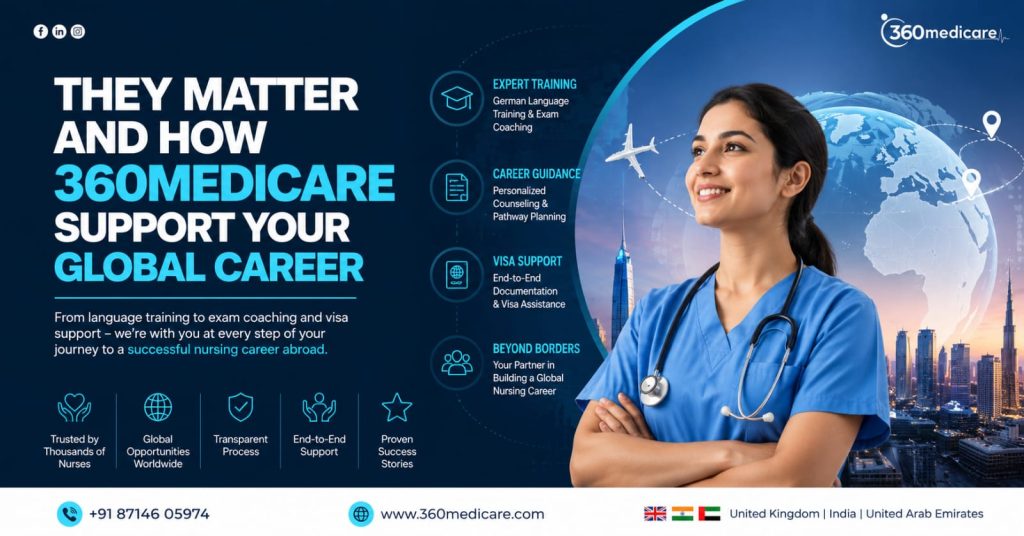
Our team supports candidates throughout every stage of the process, including:
- Career counselling
- Country selection guidance
- Language training support
- Documentation assistance
- Interview preparation
- Ethical recruitment
- Visa guidance
- Pre-departure orientation
- Post-placement assistance
Our goal is to help nurses transition confidently from Indian healthcare to successful international careers.
Conclusion
The journey from Indian nursing to international healthcare is more than changing workplaces—it’s about expanding your skills, experiencing new cultures, and unlocking long-term career opportunities.
With proper preparation, continuous learning, and expert guidance, you can confidently build a rewarding nursing career anywhere in the world.
Whether you’re just beginning to explore overseas opportunities or are already preparing for licensing exams, every step you take today brings you closer to achieving your global nursing dream.
If you’re ready to start your international nursing journey, connect with 360medicare and let our experienced team help you take the next step toward a successful healthcare career abroad.